
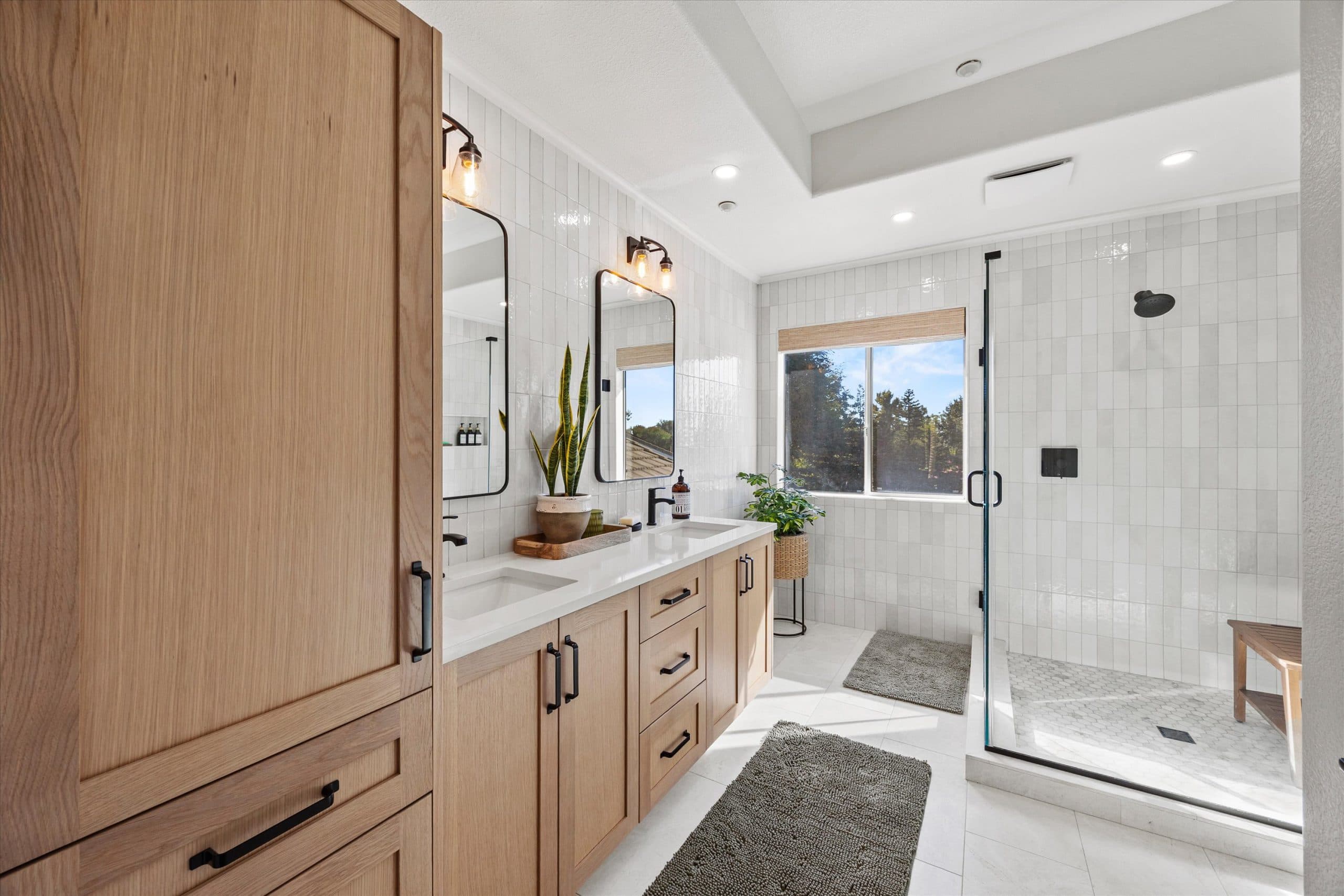

We went back to the textbooks — here’s what we found.
Old World design is everywhere right now — in interiors, architecture, new builds, and renovation projects across the country. We’re seeing it increasingly in remodeling projects throughout the Sacramento area — from Carmichael and East Sacramento to the newer custom homes in Granite Bay and El Dorado Hills. But when you start digging into what it actually means, things get murkier than the aesthetic suggests. Is it Tuscan? Mediterranean? Renaissance? All of the above?
We went back to the source material to find a real answer. Here’s what we found.
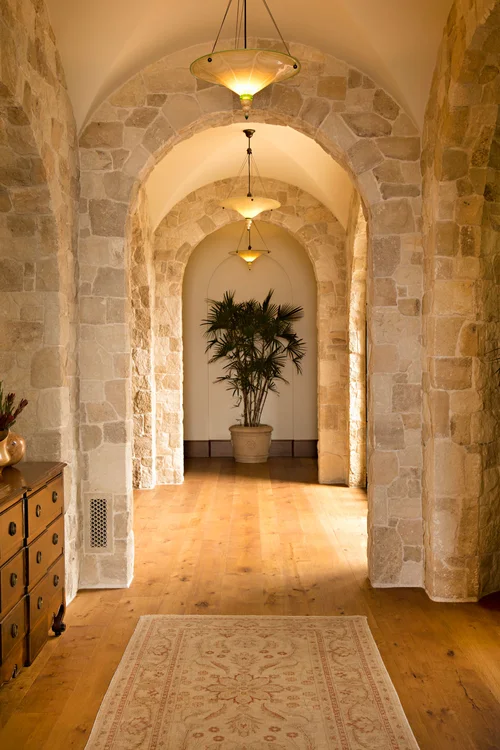
It Starts With Convergence
Old World design isn’t a single style — it’s a convergence. It draws from centuries of European design traditions: the grandeur of the Renaissance, the drama of the Baroque period, the warmth of Mediterranean and Moorish influences.
We’re talking 16th and 17th century Italy, Spain, France, and North Africa — all informing one another across trade routes, politics, and the movement of craftspeople. That cross-pollination is what gave Old World design its richness. It was never isolated or pure. It was always in conversation.
The Five Foundational Principles
When you break it all down, Old World design returns consistently to five core ideas. These aren’t arbitrary rules — they’re the natural output of a design philosophy rooted in longevity, craft, and meaning.
01 — Craftsmanship
Old World is rooted in the idea that even everyday objects should be made with artistry. Hand-carved details, hand-forged iron, hand-laid tile. It’s the human touch in every element.
This shows up in custom wood millwork and finish carpentry details — crown molding with carved profiles, coffered ceilings, wainscoting with raised panels — alongside wrought iron hardware and light fixtures, mosaic and encaustic tile floors, and plasterwork with visible texture and character. The goal isn’t perfection — it’s presence. You’re meant to notice that a person made this.
02 — Material Authenticity
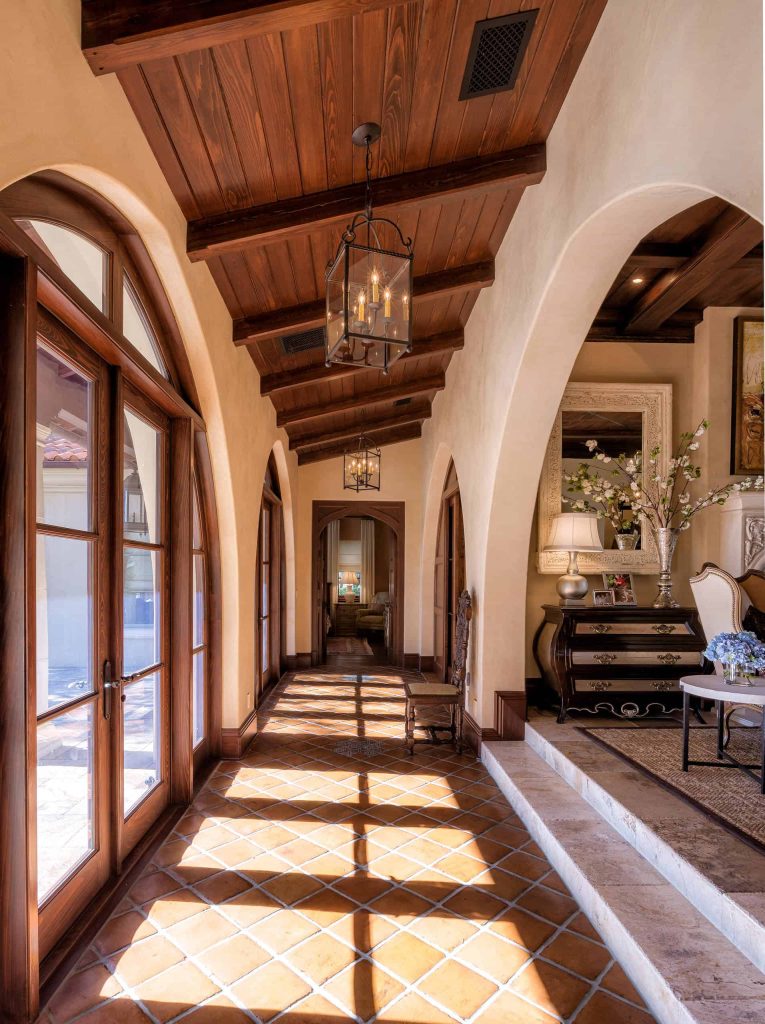
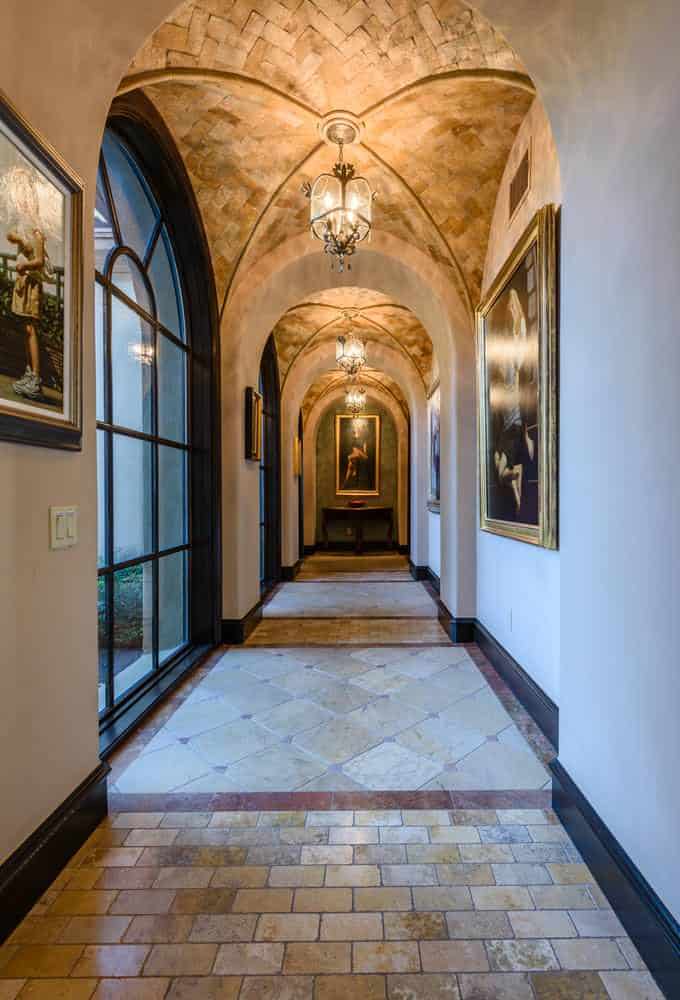
Stone, wood, plaster, iron, glass, tile. These are the same materials artisans have worked with for centuries. Nothing synthetic. Nothing trying to be something it’s not.
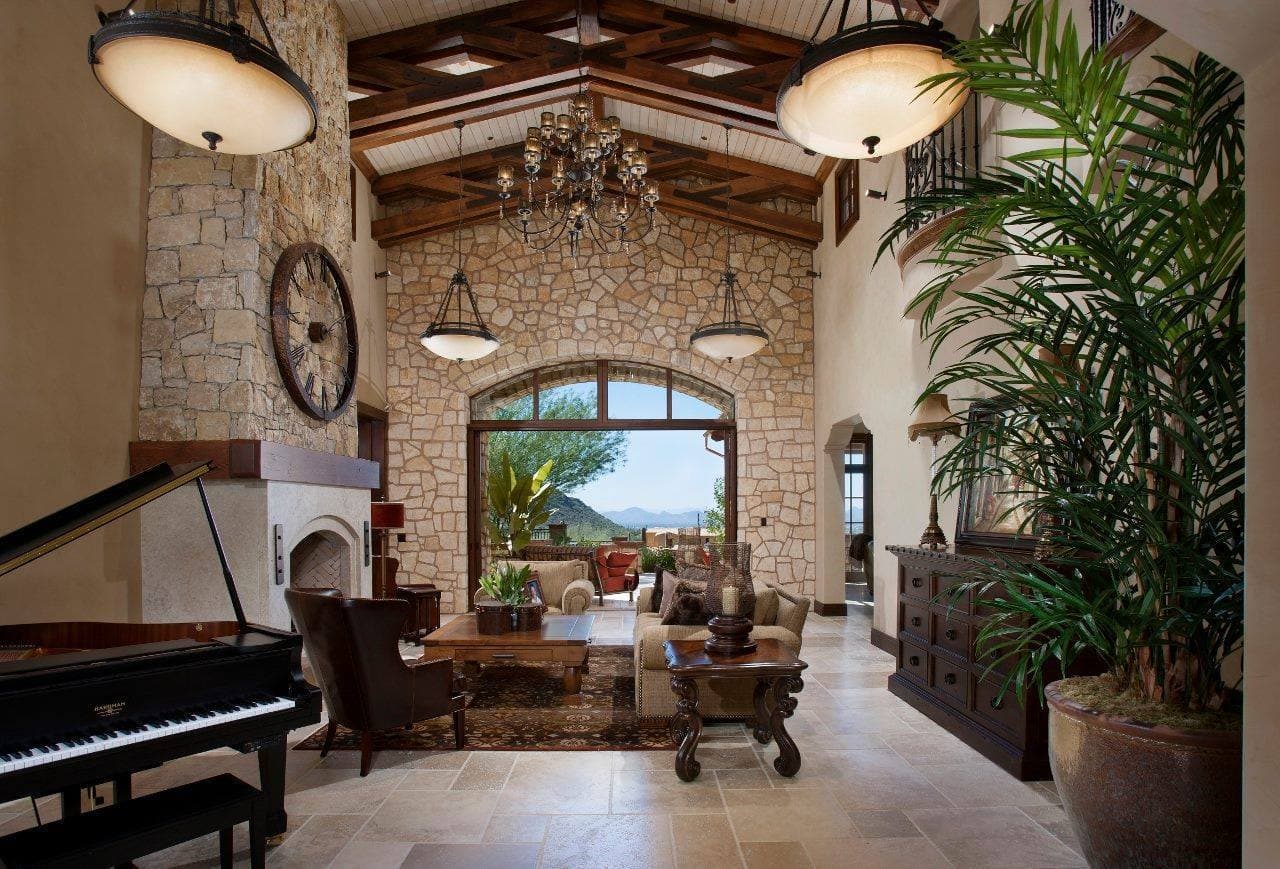
Travertine floors. Exposed timber beams. Venetian plaster walls. Reclaimed terracotta. These materials don’t just look good — they age well, develop character, and tell a story over time. That’s the point. Old World spaces are designed to improve with age, not resist it.
03 — Architectural Presence
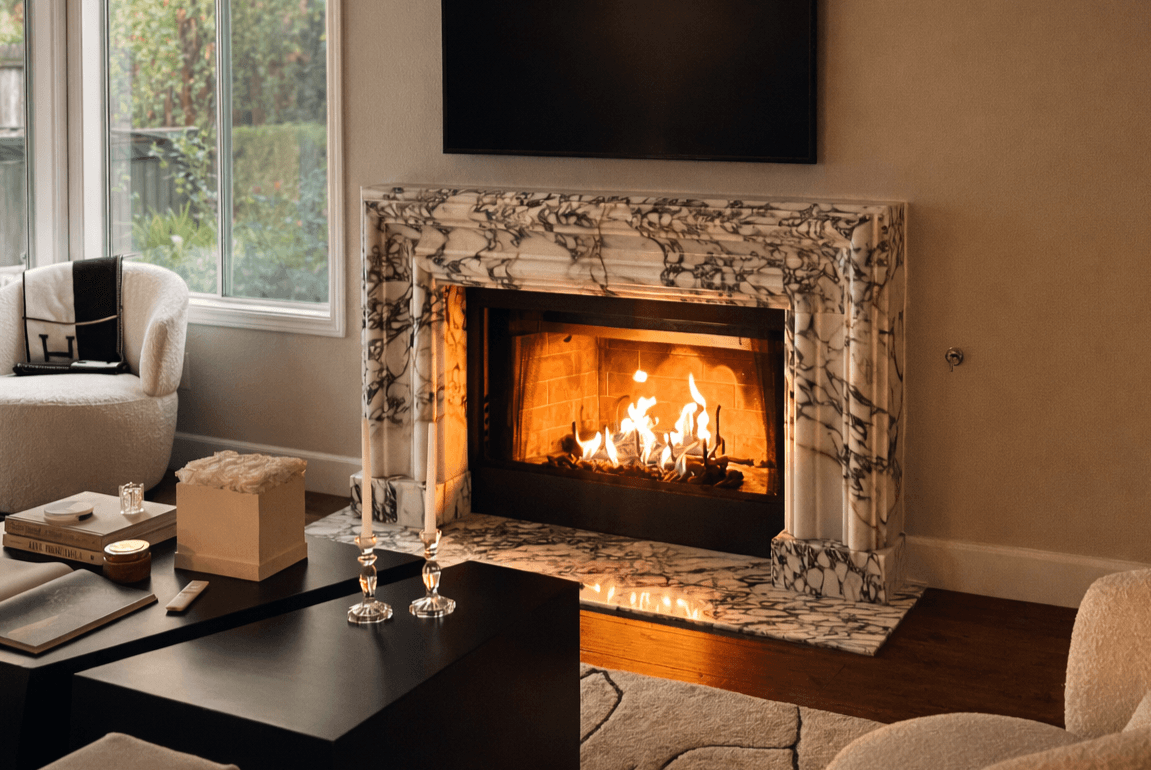
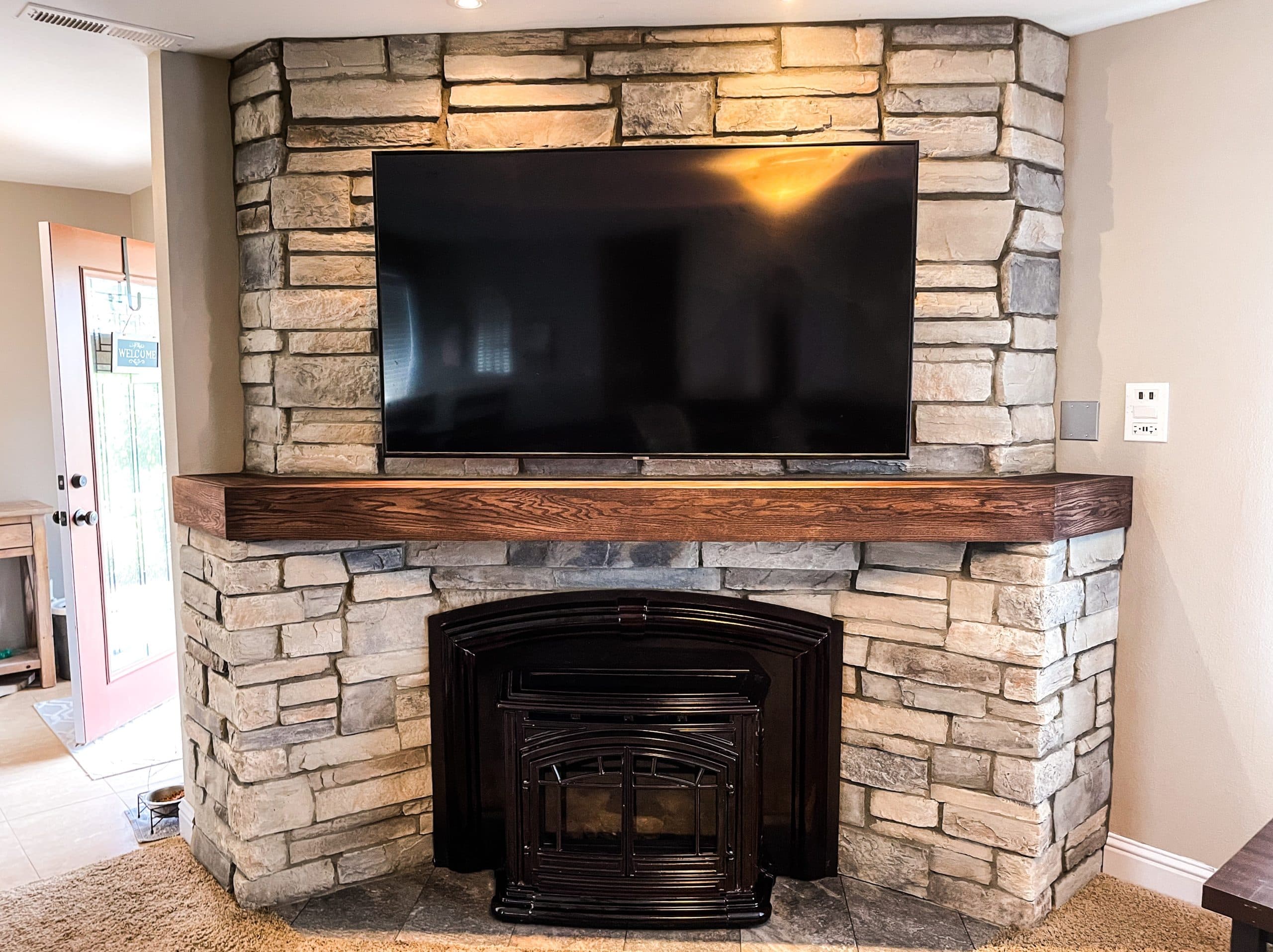
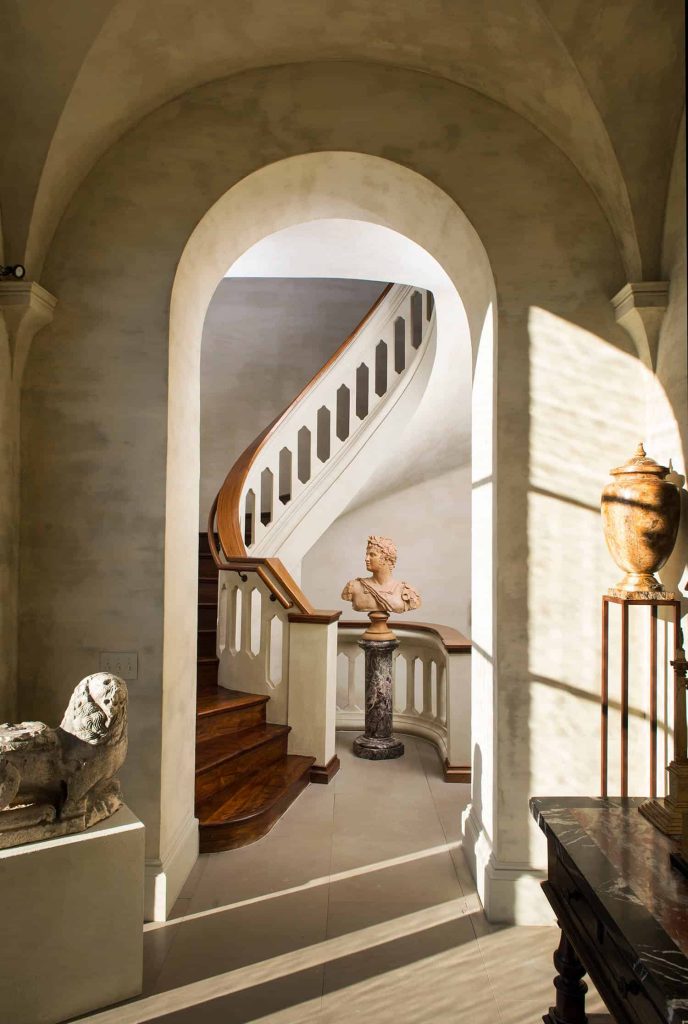
Stone fireplace surrounds with carved mantels, arched doorways, columns, beamed ceilings, vaulted spaces, thick walls. Old World spaces have weight and structure. The architecture itself is the design.
This is one of the most important distinctions between Old World and other aesthetics. In a lot of contemporary design, architecture is a neutral backdrop and decor carries the visual weight. In Old World design, it’s reversed. The bones of the space — the arches, the columns, the ceiling structure — are the statement. Furniture and furnishings respond to the architecture, not the other way around.
04 — Layered Warmth
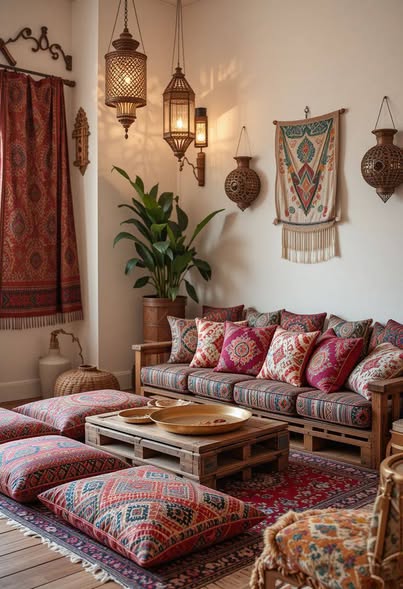
Rich textiles, Persian rugs, textured walls, candlelight. Old World spaces are meant to feel lived in — collected over time, not bought all at once.
This principle is about resisting the perfectly curated showroom look. Old World spaces feel personal and accumulated. An ornate chandelier over a worn stone floor. A faded Persian rug layered under a linen-upholstered sofa. Bookshelves with actual books. These environments communicate that people actually live here — and have for a long time.
05 — Cultural Fusion
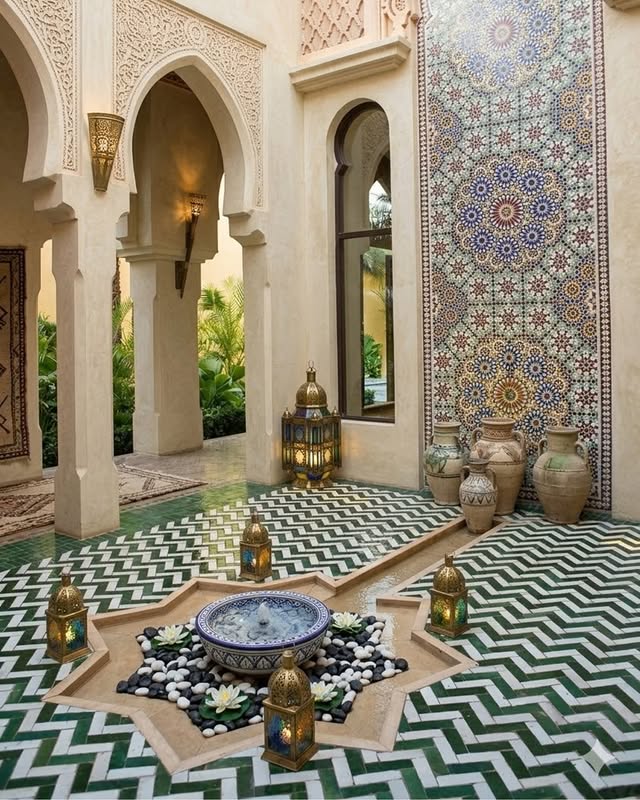
Old World was never just one thing. It was always a meeting point — Roman, Byzantine, Islamic, and Renaissance traditions all blending together. That mix is what gives it depth.
Moorish geometric tile work sitting alongside Renaissance frescoes. Arabesque screens filtering light in a Spanish courtyard. Byzantine mosaics influencing Italian cathedral design. These weren’t accidents of history — they were the result of active cultural exchange. And that hybridity is exactly what makes Old World design feel layered and irreducible. You can’t boil it down to one source.
What This Means for Design Today
These five principles aren’t a checklist and they’re not rigid rules. Think of them as a vocabulary — a shared language that connects a Tuscan farmhouse to a Moroccan riad to a Venetian palazzo. When you understand where the language comes from, you can use it more fluently.
Old World design is having a major moment right now, but the reason it endures isn’t trend-driven. It’s because these principles — craft, authenticity, architecture, warmth, cultural richness — speak to something most people are genuinely hungry for in their homes. Spaces that feel real. Materials that last. Beauty that takes time.
Old World gives us a foundation. What we do with it from here is what makes it feel current.
What element of Old World design resonates most with you?
“If you’re working on a remodel and want to bring Old World principles into your kitchen, bathroom, or fireplace — or want to talk through what authentic finish carpentry details could do for your space — we’d love to start that conversation.